


Fail Big Fail Forward Build Confidence and Break the Rules for Success
Fail Big Fail Forward Build Confidence and Break the Rules for Success
Couldn't load pickup availability
Purchase the E-book instantly
Purchase the E-book instantly
Receive Download Link via Email
Receive Download Link via Email
Send to preferred e-Reader and Enjoy!
Send to preferred e-Reader and Enjoy!
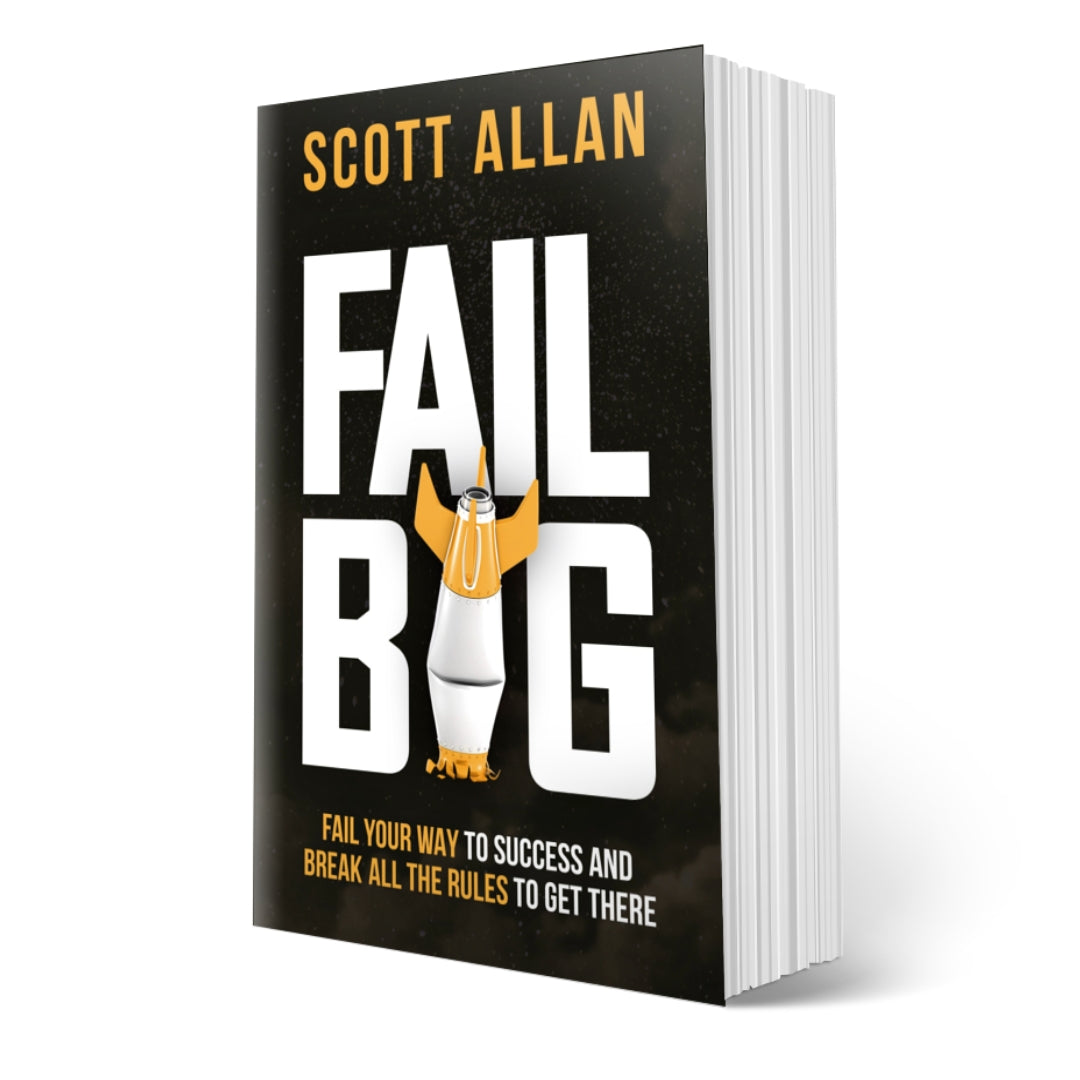
Fail Big Fail Your Way to Success and Break All the Rules to Get There is a transformational guide for anyone who feels held back by fear, self-doubt, or past mistakes. If failure has left you discouraged, stuck, or reluctant to try again, this book teaches you how to reframe failure as the most valuable stepping stone toward confidence, mastery, and long-term success.
Scott Allan uncovers the psychology behind fear, hesitation, and imposter syndrome, showing how these internal barriers keep people from reaching their greatest potential. Instead of avoiding failure, you will learn how to embrace it as a critical part of learning, growth, and goal achievement.
Inside Fail Big, you will learn how to:
- Shift your mindset from perfection-driven fear to growth-driven resilience
- Break free from imposter syndrome and stop questioning your worth or ability
- Turn setbacks into feedback that strengthens skill, confidence, and determination
- Identify the negative thoughts and behaviors sabotaging your progress
- Build emotional stamina and continue moving forward even when outcomes are uncertain
- Replace avoidance with action and fear with strategic experimentation
- Use failure as a tool to refine goals, develop mastery, and accelerate progress
Through practical strategies, relatable examples, and actionable exercises, this book guides you toward adopting a mindset where mistakes no longer define you, delay you, or derail your long-term success.
Once applied, you will begin to:
- Take bold action without waiting for perfection
- Try new opportunities without fear of judgment or failure
- Build confidence through experimentation and real experience
- Increase resilience and emotional strength
- Approach challenges with curiosity rather than fear
- Grow faster by learning from each attempt instead of avoiding discomfort
Available formats:
- eBook for easy, instant access
- Audiobook for learning during daily routines, commuting, or training
- Paperback for long-term study, highlighting, and active learning
If you are ready to stop letting fear control your decisions and instead develop a mindset built on resilience, courage, and possibility, Fail Big offers the blueprint. Success is not built by avoiding mistakes. It is achieved by learning from them, adapting, and continuing forward with confidence.
Failure is not the end. It is your beginning.
Chapter One
Chapter One
The Psychological Influence of Failure
We all respond to failure differently. Some people can handle it well and push through the painful experience. Others freeze up, lose total confidence, and feel so demotivated and helpless that they never risk failing again.
How you deal with your own failure is critical to your overall level of happiness and personal satisfaction.
As I’ll show you, the psychological impact of failure has a powerful influence on the way you live out your life. It influences the work you do, the people you hang out with, the decisions you make (or don’t make), the opportunities you attract (or don’t attract), and the quality of life experiences that you have.
Failure influences us in two ways:
1. Failure is a great learning curve. It’s an educational experience, and you can implement your failings to do better the next time. Just as the salesperson keeps trying over and over to get that sale after hundreds of rejections, you turn failure into an ally, figure out an alternative approach, and pursue your goals relentlessly.
2. Failing scares you. At the very least, you are intimidated by the thought of failing. You play it safe and take small chances, too small to have any significant impact.
Failure makes you question your self-worth, level of skill, and shakes your confidence so much that it could take you months to recover after one incident. Failure brings about stress and leverages fear so badly that you become depressed and feel totally worthless, helpless, and ashamed.
Failure Avoidance
It’s not a surprise we are afraid to fail. The psychological trauma can have a lifelong impact. This causes us to stay away from the ledge for fear of falling off. It induces failure avoidance, which is when we are so fearful of making a mistake and screwing up that we do absolutely anything to avoid failing.
But…avoiding failure doesn’t mean you get off the hook. In fact, it has the opposite effect. By living life so carefully, you end up avoiding the great opportunities that come your way.
As JK Rowling has said, “If you live your life with such caution, trying to avoid failing at all costs, you end up failing by default for not taking action. Either way, you lose.”
Failure. Disruptions. Unexpected events. These do and will happen. The question is, are you psychologically prepared for it? Do you have a plan for when good turns bad? It’s okay if you don’t. Most people are unprepared because we are trained to deal with the crisis when it happens. But by that time, it’s too late. You don’t suddenly develop the right mindset or skills to handle failure when it occurs.
The psychology of handling failure starts with preparing for battle before the war begins. You can’t expect to win the fight if you wait until the night before to begin training. The other guys have been training for months and are fully prepared. Lack of preparation and false expectations leads to failure by default. You fail before the fight, and not during it.
This is what it’s like to deal with life’s failings. If you attempt to avoid failing, it’s the same as just giving up. This is self-sabotage. Mentally, we know failure is inevitable, but knowing it and accepting it as a reality are two different things.
It is breaking apart the “better you than me” syndrome. If you’ve ever witnessed a friend going through a nasty divorce or financial trouble, you may have caught yourself saying, “Better him than me.” This is as if to say you’re off the hook and these things won’t happen to you. Psychologically, you’re thinking you escaped having to go through such an experience.
But just wait… everyone has their day. Today, it is your best friend, but it could be you next week. Does this thought scare you?
Be ready to embrace the worst, and you will develop immense gratitude for the best of days. You can’t avoid failing any more than you can avoid dying. The best you can do is prepare for it so you’re equipped and ready when the day arrives.